
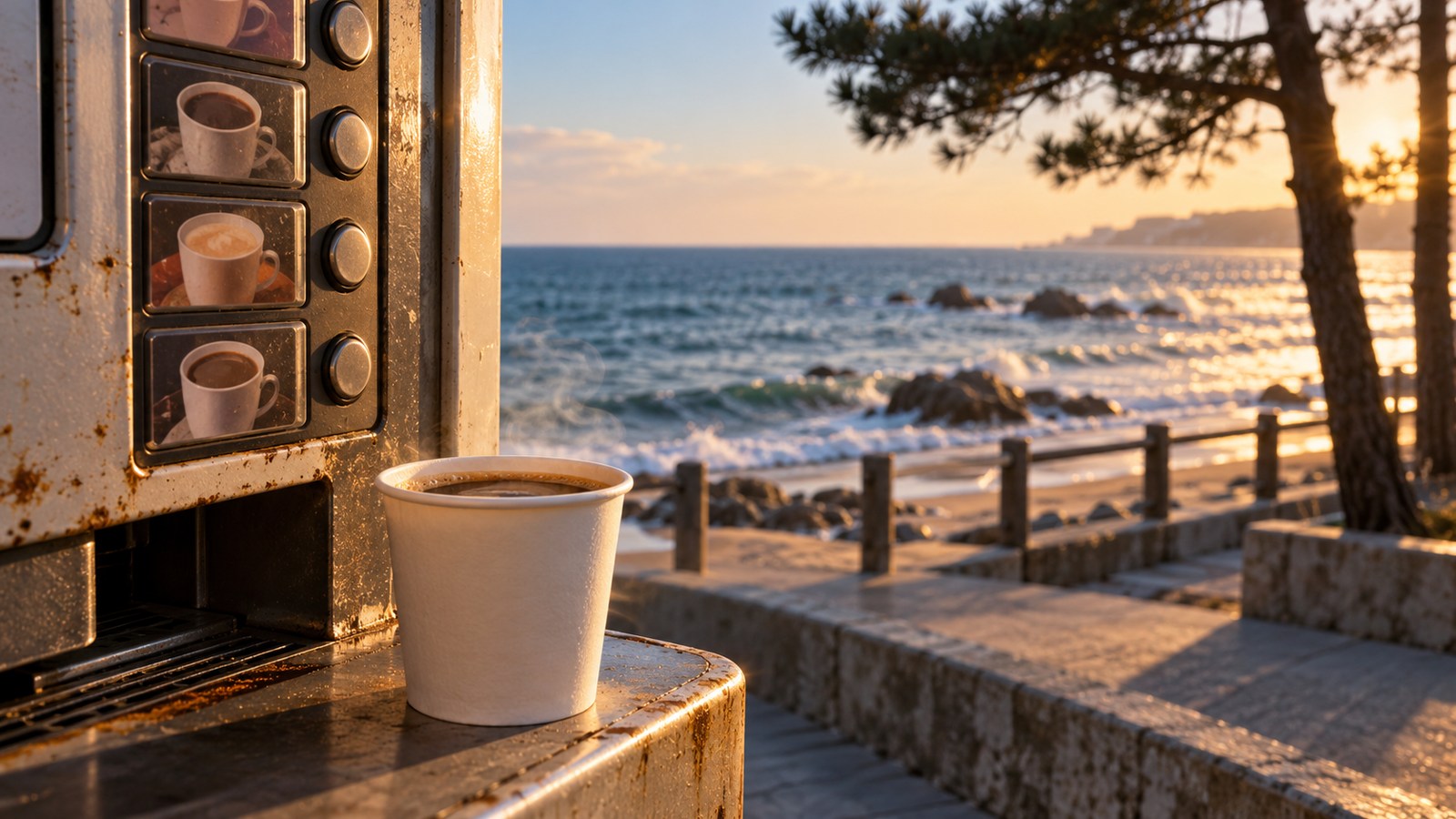
Coffee at Anmok Beach in Gangneung has a story that begins not with fashionable cafés or specialist roasters, but with rows of vending machines beside the sea. During the 1980s, visitors came to this stretch of Korea’s east coast to choose a cup of instant coffee, look towards the water and spend time with friends or partners. What began as a simple seaside convenience gradually became part of Gangneung’s identity as a coffee destination.
Today, Anmok’s Coffee Street is lined with cafés, independent coffee businesses and places where visitors can enjoy a drink with views of the East Sea. Its history offers an interesting comparison with Italy’s espresso-counter tradition. The settings are different, but both cultures show how a small cup of coffee can become more than a drink: it can create a shared pause in the day.
How Anmok’s Coffee Tradition Began
The history of Gangneung Coffee Street is closely connected to Anmok Beach. According to cultural reporting on the city’s coffee development, vending machines began appearing along the beach in the 1980s. Their popularity grew, and by the 1990s visitors could choose from numerous machines, some remembered for their slightly different coffee flavours.
The machines offered a simple experience. A visitor selected a drink, collected a cup and found a place to enjoy it near the water. The attraction was not necessarily the complexity of the coffee. It was the combination of convenience, a seaside setting and the opportunity to share a short break.
The vending-machine tradition also gave Anmok a distinctive identity before its café scene became widely recognised. Visitors could make a small outing around choosing coffee and watching the sea. That connection between place and drink helped establish the foundation for the area’s later development.
From Vending Machines to Coffee Street
Anmok’s coffee culture gradually changed as cafés began opening near the beach. The development of specialty coffee and the arrival of skilled baristas brought different brewing methods, roasted beans and more varied menus to the neighbourhood.
The change was not simply a replacement of vending machines with cafés. It expanded the ways visitors could experience coffee beside the sea. A quick machine-made cup remained part of the area’s history, while cafés introduced opportunities to sit longer, compare different drinks and enjoy a broader coffee menu.
Gangneung’s reputation as a coffee destination grew further through local coffee businesses, coffee-related attractions and the annual Gangneung Coffee Festival, which began in 2009. The festival connects coffee with the city’s cultural identity and gives visitors another reason to explore its coffee scene.
The result is a destination where coffee is connected to geography as much as preparation. Anmok’s beach, harbour and cafés form a setting in which the surrounding landscape becomes part of the experience.
The Seaside Ritual: Coffee with Time to Look Around
A visit to Anmok is different from stopping at a café simply because it is convenient. The beach provides a natural reason to slow down. Visitors can walk along the waterfront, choose a drink and spend time looking towards the sea.
The tradition also reflects the social side of public spaces in Korea. Friends, couples and families can use a coffee stop as part of a wider outing. The drink provides a shared activity, while the beach offers room to talk, walk or enjoy the view.
The vending-machine era is especially interesting because it shows that a coffee ritual does not need elaborate surroundings. A simple cup could become memorable through its location and the company of the people sharing it. Modern cafés have added more choices, but the basic attraction of enjoying coffee near the water remains.
Visitors should not assume that every café offers the same atmosphere. Some are designed around large windows and sea views, while others focus more closely on coffee preparation. Exploring at a relaxed pace makes it easier to find a setting that suits the visit.
Anmok Beach and the Italian Espresso Counter
The comparison with Italy begins with a shared idea: coffee can be a social pause built into an ordinary day. However, the two traditions organise that pause differently.
In many traditional Italian bars, espresso is commonly ordered and consumed standing at the counter, a practice known as al banco. The counter is both a service point and a social space. Customers may exchange a few words with the barista, greet familiar faces and drink a small coffee before continuing with work or other plans.
The Italian espresso bar developed around quick service and everyday accessibility. Historical research into European coffee culture describes how the counter became a standard place for drinking espresso, with customers often standing rather than receiving table service. This format made the coffee break part of the rhythm of urban life.
Anmok’s seaside coffee ritual is generally more connected to the surrounding landscape. Rather than concentrating the experience around a counter, visitors often choose a place where they can look towards the beach. The drink may be part of a longer visit rather than a brief stop between daily tasks.
There is also a difference in the role of time. An Italian espresso counter often supports a short, efficient break. Anmok encourages visitors to connect coffee with a walk, conversation or period of looking out over the water. Neither approach is better; each reflects the environment in which the ritual developed.
The comparison also reveals a common cultural thread. Whether standing beside an espresso machine in Italy or sitting near the East Sea in Gangneung, people use coffee to create a moment of connection. The setting changes, but the social purpose remains recognisable.
Planning an Overnight Visit to Gangneung and Yangyang
Anmok Beach can be included in a short Gangneung visit or a longer east-coast itinerary. Travellers staying overnight should consider how far their accommodation is from the beach, how they will travel between attractions and whether they want to visit nearby destinations such as Gyeongpo or Gangmun Beach.
Some visitors researching accommodation-related services may encounter the Korean expression 출장마사지, which literally refers to a massage service involving travel to the customer’s location. Another term, 홈케어, is used broadly in service listings for care or services provided at home or an accommodation. The expressions can overlap in advertising, so the wording alone should not be treated as proof of a provider’s qualifications, services or availability.
For searches using Gangneung-specific wording, 강릉출장마사지 identifies Gangneung in the search phrase. The corresponding Yangyang wording appears in 양양출장마사지, referring to Yangyang, a separate coastal destination north of Gangneung. These are search terms rather than endorsements. Anyone considering an appointment should independently confirm the provider’s identity, lawful operating status, full price, service details and accommodation policies. It is also sensible to check whether the accommodation permits outside service providers before making arrangements.
For an overnight trip, practical planning matters more than trying to fit every attraction into one schedule. Confirm transport, check accommodation details and leave enough time to enjoy the beach without rushing.
A Short Visitor Checklist
Before visiting Anmok Beach, keep these points in mind:
- Check the weather: Coastal wind and rain can change the feel of a beach visit.
- Plan transport: Confirm current bus, taxi or driving arrangements to Anmok.
- Allow time: Include space for a waterfront walk as well as a coffee stop.
- Explore the options: Compare cafés and menus rather than assuming every venue offers the same experience.
- Respect the setting: Follow beach signs, dispose of rubbish properly and avoid disturbing other visitors.
- Confirm overnight arrangements: Check accommodation rules and independently verify any additional services.
- Check opening hours: Individual cafés and businesses may follow different schedules.
Make the Coffee Stop Part of the Journey
The most useful way to experience Anmok is to treat the coffee tradition as part of a wider visit rather than simply choosing a café and leaving. Walk along the beach, notice the relationship between the waterfront and Coffee Street, and consider how the area developed from a row of vending machines into a recognised coffee destination.
Before travelling, check current transport information and choose an accommodation location that fits the rest of the itinerary. Once there, leave time for a coffee and a look towards the sea. That simple plan connects the area’s history with the everyday pleasure that continues to draw visitors to Anmok Beach.
Conclusion
Gangneung’s Anmok Beach coffee tradition demonstrates how an ordinary convenience can become part of a destination’s cultural identity. The vending machines of the 1980s helped establish a seaside coffee habit that later developed into a lively street of cafés and coffee businesses.
Compared with Italy’s espresso counter, Anmok offers a different expression of the same social idea. Italian coffee culture often turns a short standing break into a daily meeting point, while Anmok connects coffee with the open landscape and the slower pace of a seaside visit. Both show that coffee culture is shaped not only by what is in the cup, but also by where people drink it and how they share the moment.