
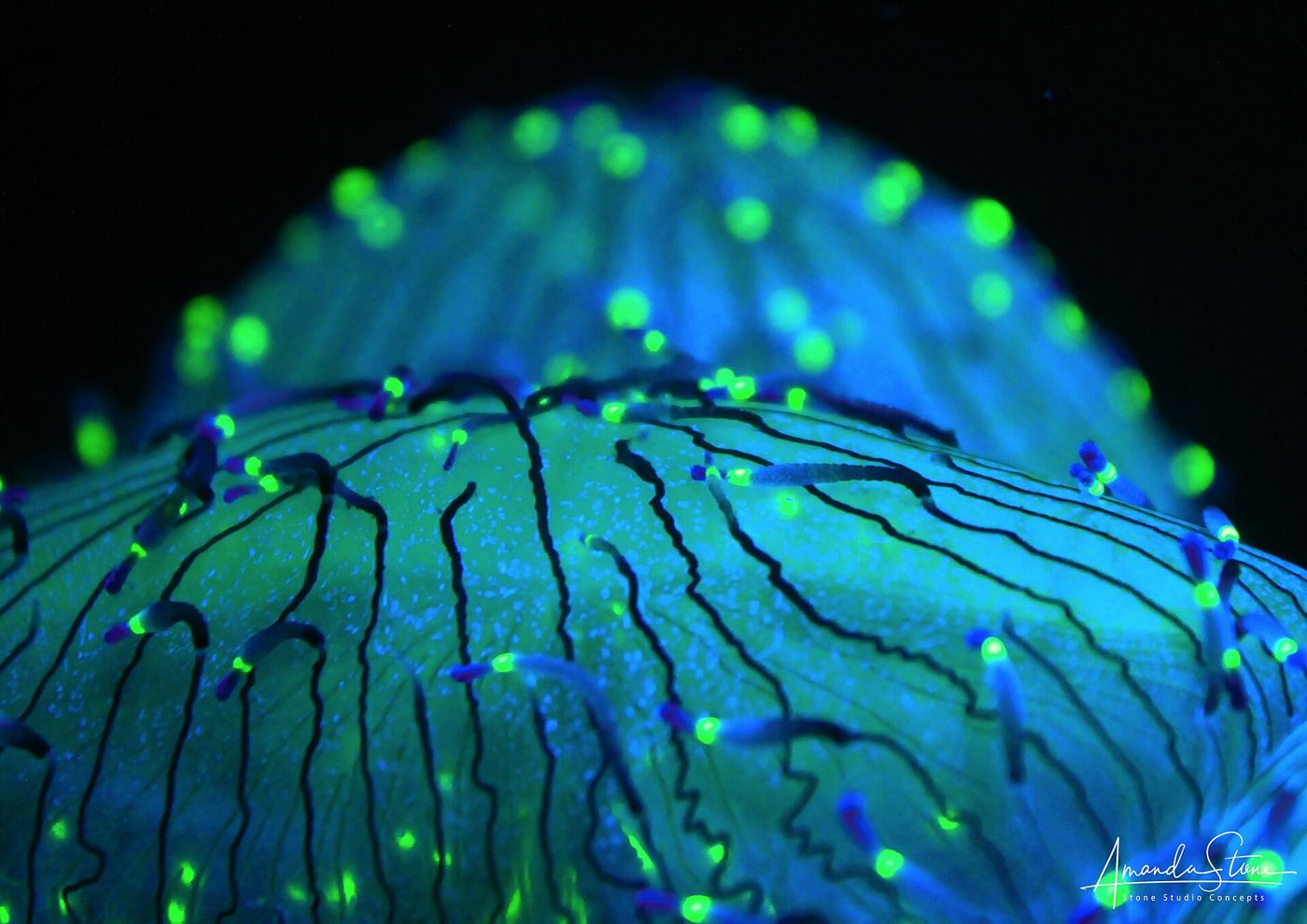
Far below the reach of sunlight, where the ocean is black and cold, many animals carry their own light. Jellyfish pulse with soft blue glows, anglerfish dangle luminous lures in front of their jaws, and tiny shrimp release clouds of glowing chemicals when threatened. This living light is called bioluminescence, and it is one of the most common tricks in the deep sea. The animals make light through chemical reactions inside their bodies, often with the help of light-producing bacteria that live in special organs. They use the glow for many purposes: to attract prey, to confuse predators, to signal to mates and even to hide, since a faint glow from below can match the dim light from above and make an animal invisible from beneath. In the deep ocean, where eyes are of little use, light becomes a language of its own. Some species even use patterns of flashes to recognise members of their own kind in the darkness.
What the Evidence Shows
Researchers are still discovering how many deep-sea animals glow and what each flash means. Submersibles with sensitive cameras now film the displays in their natural setting, revealing patterns that laboratory tanks could never show. Some fish flash in rhythms that may identify them to their own kind, while certain squid use light to dazzle attackers and escape in the confusion. The chemistry of bioluminescence has also found a use far from the ocean: the same glowing reactions now light up medical tests, letting scientists track cells and molecules inside living tissue. Engineers are studying the efficiency of the process too, since the animals produce light with almost no waste heat. The deep sea remains one of the least explored places on Earth, and every expedition brings back new glowing species that science has never described. Reporting and analysis from sources such as National Science Foundation track the same developments, and specialists following the deep-sea creatures glowing in the darkest ocean say the direction is now consistent across independent lines of evidence.
The Wider Context
The wider context is a research landscape in which replication and open data now decide reputations. Findings connected to the deep-sea creatures glowing in the darkest ocean are being checked by independent groups with shared datasets, and the teams involved publish their methods in full so rivals can test every step. That discipline is slower than a headline cycle, but it is why results in this area increasingly survive first contact with scrutiny.
What Happens Next
What happens next in the story of the deep-sea creatures glowing in the darkest ocean will be decided by follow-up work already under way: larger samples, longer observation and instruments that have not yet come online. The researchers involved are unusually united on one point, that the current results justify the next investment of time and money. Readers will not have to wait long for the first tests of that claim. You can follow related developments in our coverage of science.
There is a practical lesson in all of this for readers deciding what to do today. Start with the verified facts, be wary of anyone promising certainty, and prefer reversible steps while the evidence is still developing. Circumstances differ by country, income and personal situation, so general guidance should always be weighed against your own context before you act on it in any significant or lasting way.